Vocational Diploma in Popular Music (Film Music)
Offered by: Offered jointly by PRISM Foundation and partner universities
Mode of Study: Part-Time
Awarding Body: Jointly by PRISM Foundation and partner universities
Benchmark: UGC Guidelines
🎼 Rationale
Film Music is a vital part of India’s cultural identity, yet until now lacked a formal syllabus. This diploma provides structured training in playback and professional singing, combining theory, practice, and industry exposure. Students learn vocal techniques, mic handling, breathing, diction, notation, ear training, and studio skills, alongside appreciation of diverse genres (Indian Classical, Folk, Western, Ghazal, Devotional, Bhajans, Film).
🎯 Aim & Objectives
- Build strong foundations in music theory, vocal usage, and singing skills.
- Train in notation reading, sight singing, breathing techniques, and ear training.
- Introducing professional and playback singing skills.
- Provide exposure to the music industry and interdisciplinary studies.
📚 Learning Outcomes
Knowledge & Understanding
- Explain Popular Music, musical notes, rhythm patterns, vocal usage, and film music context.
Practical Skills
- Perform vocal exercises, sing with pitch/rhythm, karaoke, and sight singing.
- Analyze music across genres and develop confidence in performance.
Transferable Skills
- Apply musical elements to reflect mood/emotion.
- Work individually and in teams, evaluate music practices, and use correct terminology.
📖 Course Structure
Semester 1 (30 Credits)
- General Education (12 Credits): Introduction to Music, Music Theory I, History of Music I, Popular Music
- Vocational Education (18 Credits): Music Practical I & II, Sight Singing I
Semester 2 (30 Credits)
- General Education (12 Credits): Music Theory II, Playback & Professional Singing, Film Studies I, Interdisciplinary Music Studies I
- Vocational Education (18 Credits): Music Practical III & IV, Sight Singing II, Performance Skills I
Total: 60 Credits | 2 Semesters | 15 weeks each | ~30 hrs/week
📝 Assessment
- Each module: 100 marks (Tests – 50, Final Exam – 50).
- Pass Requirement: Minimum 40% per module.
- Attendance: 75% mandatory.
🎤 Teaching Methods
Lectures, demonstrations, workshops, studio visits, group exercises, and performances.
📌 Student Support
Module notes, reference books, internet/computing facilities, music labs, workshops, staff guidance, and discussion lounges.
✅ Quality Control
Regular review of notes, papers, student feedback, consultative meetings, assessment boards, and exit feedback.
Course Features
- Activities Academic Degree Programs
You May Like


Popular Music (Professional & Film Singing)
Course Description The PRISM Foundation is pleased to announce its featured course, POPULAR MUSIC – A graded curriculum for Professional and Playback Singing. It stands...
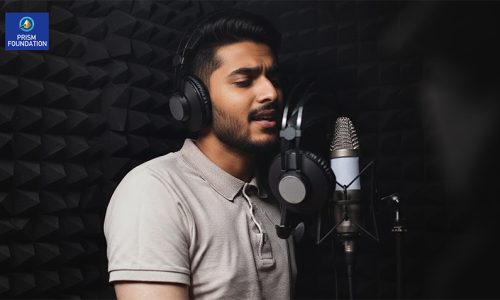
Certificate Course in Film Music – Vocal
COURSE DESCRIPTION: The certificate in film music is a 3month short-term course designed for students, working professionals, and anyone with a passion for music—regardless of...
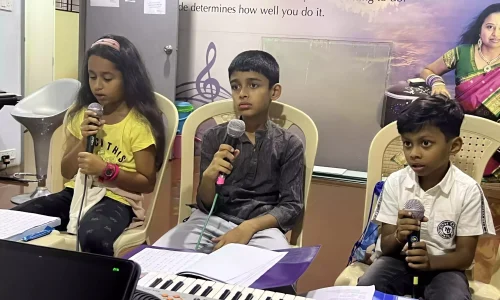
Certificate Course in Exploring Musical Talents in Kids
COURSE DESCRIPTION: The Certificate in Exploring Musical Talents in Kids is a 3 month short-term course designed specifically for children aged 3 to 6 years...
Certificate Course in Devotional Music – Vocal
COURSE DESCRIPTION: The Certificate in Devotional Music is a 3 month short-term course designed for students, working professionals, and anyone with a passion for music—regardless...
Certificate Course in Bhavageethe – Vocal
Course Description: The Certificate in Light Indian Classical Music is a 3 month short term course that offers a unique opportunity for individuals of all...